
Housings and structural components often look straightforward on a drawing, yet their production can involve demanding requirements for dimensional stability, mounting interfaces, wall thickness, finishing and repeatability. Procurement teams also need visibility beyond the initial casting price, especially when the same supplier may handle tooling, machining, finishing and inspection.
For automotive, electronics and industrial-equipment programs, comparing die casting suppliers around the entire manufacturing route provides a more useful basis for technical and sourcing discussions. We at Hanstar Technologies approach these projects by considering the relationship between alloy, tooling, secondary operations and production coordination from the outset.
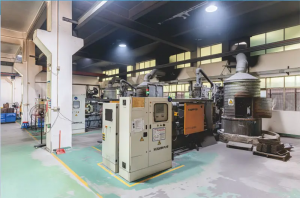
Examine Tooling Before Production Begins
Tooling deserves detailed attention because the die influences filling, cooling, ejection and the consistency of the finished casting. Engineers should review cavity layout, gate locations, cooling channels, parting lines and ejection features alongside the component geometry. Such discussions can reveal potential production constraints before the mold enters fabrication.
Housing designs frequently contain bosses, ribs, mounting holes and recessed areas that must work within the opening direction of the die. If these features are arranged without considering tooling access, additional mechanisms or later design revisions may become necessary. The engineering review should distinguish functional complexity from geometry that could be simplified without affecting the part’s purpose.
Production volume also belongs in the tooling conversation. Programs with sustained demand may justify a different cavity strategy, maintenance plan or die construction approach from lower-volume projects. Procurement teams comparing die casting suppliers should ask not only how a die will be built, but also how its design relates to the expected production schedule and service requirements.
Compare Alloy Options With The Application
Aluminum, zinc and magnesium each bring different characteristics to a casting program. Aluminum is commonly considered where lower weight and structural performance matter, while zinc can suit compact components requiring detailed features and dimensional stability. Magnesium offers another route for applications where weight reduction is particularly important.
Part size and geometry can shift the balance. Large housings may place considerable emphasis on mass and structural behavior, whereas smaller electronic or mechanical components can make feature definition and dimensional control more prominent. Operating temperature, vibration, corrosion exposure and contact with other materials should also form part of the evaluation.
Look Beyond The Raw Casting
Casting rarely represents the final manufacturing step for a precision housing. CNC machining may be required for mounting faces, threaded holes, sealing surfaces or interfaces that need tighter dimensional control than the as-cast condition can provide. The machining plan should be discussed early so critical features have suitable datum references and enough material for subsequent operations.
Surface finishing presents another consideration. Depending on the application, components may require treatments related to appearance, corrosion resistance, wear or electrical performance. Finishing specifications should be linked to the base alloy and the intended environment rather than treated as a generic final-stage request.
This broader view helps sourcing teams compare die casting services on more than the quoted casting cost. Tooling, CNC work, finishing, inspection and packaging can all affect the delivered component and the number of suppliers involved in the program. Keeping related operations coordinated can also simplify communication around engineering changes.
Assess Quality Controls And Documentation
Quality evaluation should begin with the dimensions that matter most to assembly and function. Critical interfaces, hole locations, flatness, wall sections and other specified characteristics need defined inspection methods and acceptance criteria. A supplier’s measurement capability is especially relevant when housings must mate with machined, electronic or mechanical assemblies.
Inspection documentation adds another layer of useful information. Reports can help purchasing and engineering teams trace dimensional results, identify recurring variation and maintain records across production batches. For programs with formal quality requirements, it is also useful to clarify how nonconforming parts, corrective actions and engineering changes are documented.
Our quality process includes CMM verification of critical dimensions, with inspection reports shipped with every order. Within our broader die casting services, this measurement step sits alongside casting, post-machining and finishing so customers can receive production information tied to the parts being delivered.
Evaluate Production Coordination
Supplier evaluation becomes more practical once the entire program is mapped from purchase order through shipment. Sourcing teams should understand how engineering changes are communicated, how production schedules are updated, which operations occur internally and how quality information moves between departments. Clear ownership matters particularly for automotive and industrial programs with recurring releases.
Capacity should be considered against actual demand rather than a general machine count. Part size, alloy, cycle time, cavity configuration and secondary processing all influence usable production capacity. A supplier that can discuss these variables in technical terms gives procurement teams better information for planning future releases.
At Hanstar Technologies, we support die casting programs involving aluminum, zinc and magnesium, with in-house die design, prototyping, high-volume casting, CNC post-machining, surface finishing and dimensional inspection. Our goal is to keep the manufacturing route connected from the initial tooling discussion through production delivery. If your team is evaluating die casting suppliers, share your drawings, alloy requirements and projected volume with us for a technical review.
Conclusion
Supplier evaluation becomes much clearer once the casting is viewed as part of a larger manufacturing program. Tool construction, alloy behavior, machining requirements, surface treatment, measurement practices and production coordination can each affect cost, timing and part consistency. Reviewing those factors together gives automotive, electronics and industrial-equipment teams a stronger technical basis for comparing die casting services.
With its integrated approach to tooling, casting and quality control, Hanstar Technologies can work with your engineering and sourcing teams from design review through production. Send us your component requirements to discuss the manufacturing route that fits your program.