
Machining plans are shaped by far more than the dimensions shown on a drawing. A narrow cavity may require a different tool approach from an open pocket, while an awkward datum can complicate setup even if every tolerance looks reasonable on paper. For custom CNC parts, geometry, material behavior, and finishing requirements need to be considered together from the beginning. At Hanstar Technologies, we approach these details as interconnected manufacturing factors, using the design itself to guide practical decisions about setups, tooling, machining sequence, and inspection.
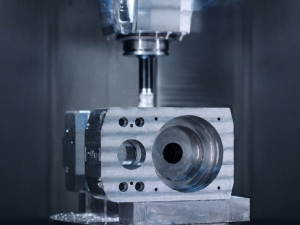
Read Geometry Through Tool Accessibility
Feature accessibility is one of the first questions to address during CNC process planning. A pocket that opens directly toward the cutting tool may be straightforward, but a deep internal feature can restrict tool diameter, cutting length, or approach angle. Three-axis machining works effectively for many surfaces and features, while four-axis capability can provide additional access around a component without relying on as many separate setups.
Wall geometry deserves similar attention. Thin walls can deflect under cutting forces, especially when the material has limited stiffness or the wall is relatively tall compared with its thickness. Deep pockets introduce another concern: long tools can be more susceptible to vibration and reduced cutting stability. Designers can often improve manufacturability by avoiding unnecessarily deep features, providing sensible radii, and maintaining practical wall proportions.
Hole locations, slots, and recessed areas should also be reviewed from the direction in which they will be machined. A feature may be dimensionally acceptable yet difficult to reach with standard tooling. For custom CNC machining, accessibility influences not only the cutting strategy but also fixture design, setup count, tool selection, and cycle time.
Establish Datums Around Real Assembly Needs
Datum selection gives the machining process a reference framework. The primary datum should normally relate to a surface or feature that has a meaningful role in how the part is positioned, assembled, or inspected. Secondary and tertiary references then establish the remaining degrees of constraint without creating unnecessary ambiguity.
A poorly selected datum scheme can create difficulties even when individual dimensions are tightly specified. Suppose a mounting hole pattern must align with a mating housing; referencing those holes from an unrelated outer edge may introduce additional positional variation. Referencing the functional mounting surface and appropriate locating features can create a more coherent relationship between machining and final assembly.
Designers should also distinguish between manufacturing references and functional references. They may coincide, but they do not always need to. During process planning, the machining team may establish temporary workholding references while inspection verifies the finished component against the drawing’s functional datums. This distinction becomes particularly valuable for custom CNC parts containing several interconnected precision features.
Match Material Behavior With Machining Strategy
Material machinability affects tool selection, cutting parameters, chip control, heat generation, and surface quality. Aluminum alloys can generally support relatively high cutting speeds, whereas stainless steel may require more controlled parameters because of work hardening and heat retention. Titanium presents another set of considerations because its low thermal conductivity can concentrate heat near the cutting zone.
The same geometry can behave differently across materials. A thin rib that remains stable during aluminum machining may need a more conservative strategy in a tougher alloy. Deep pockets, small-diameter holes, and narrow slots can amplify these differences because heat dissipation and chip evacuation become more challenging as access becomes restricted.
Surface finish requirements add another variable. A functional surface may need a particular roughness value, while an appearance-oriented face could require additional finishing operations. If anodizing, plating, polishing, or another treatment is specified, dimensional allowances and masking areas may need to be considered before machining begins. Custom CNC machining works most predictably when material and finishing requirements are treated as part of the process rather than isolated notes.
Translate Design Details Into Production Steps
Once geometry, material, and functional references have been reviewed, the design can be translated into an actual machining sequence. Hanstar’s custom CNC milling process uses rotating cutting tools to remove material from solid stock, producing features such as flat surfaces, pockets, holes, and slots. Depending on feature orientation, our equipment can work from three sides through 3-axis machining or gain additional access with 4-axis machining.
Setup planning has a direct effect on dimensional relationships. Keeping related features within the same setup can reduce opportunities for accumulated positioning variation, while particularly complex parts may require several orientations. Fixture contact points also need consideration: they should hold the workpiece securely without interfering with the cutting path or damaging finished surfaces.
Tool access, material response, and inspection requirements are reviewed alongside the drawing rather than after machining begins. That approach gives custom CNC parts a clearer route from digital geometry to physical production and helps procurement teams understand why two visually similar designs can carry very different manufacturing costs.
Conclusion
Good CNC planning begins with reading a part as a manufacturing system rather than a collection of isolated dimensions. Geometry determines access and setup strategy; material influences cutting behavior; datums establish dimensional relationships; and finishing requirements can affect both machining allowances and inspection.
Our team at Hanstar Technologies combines CNC equipment with engineering and inspection capabilities to assess these factors as part of one practical workflow. If you have a drawing that needs a machining strategy, send it to us for an engineering discussion tailored to the part.