
Complex aerospace components rarely fail a manufacturing review because one dimension is difficult to measure. More often, the challenge comes from how several surfaces, holes, pockets, walls, and mounting features interact within the same part. 5 axis aerospace machining can provide broader tool access for such geometries, but the machining method still has to reflect the drawing, datum scheme, material, and functional requirements. At Hanstar Technologies, we approach these projects from the relationship between part design and manufacturing strategy rather than treating machine capability as the only consideration.
Reading Multi-Surface Geometry
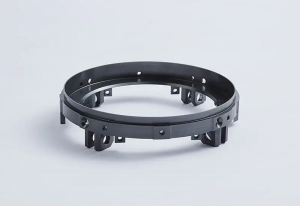
Multi-sided aerospace geometry can contain features that sit on different orientations, making access a central manufacturing consideration. A pocket may be easy to reach from one direction while a nearby hole or angled surface requires another tool orientation. If these features are designed without considering accessibility, the manufacturing plan may require additional setups, specialized tooling, or alternative machining sequences.
Part orientation also influences how accurately related features can be positioned against one another. Every repositioning introduces another opportunity for datum transfer and setup variation. With CNC machining for aerospace, engineers can plan tool movement around several faces while keeping more features connected to a common coordinate strategy. The practical value lies not simply in reaching more surfaces, but in reducing unnecessary changes in how those surfaces are referenced.
Thin walls add another layer of difficulty. Aerospace structures often combine lightweight sections with localized areas for fasteners, interfaces, or mounting loads. Excessive cutting forces can affect dimensional stability, particularly after material has been removed from larger billet sections. Toolpath direction, cutting parameters, support conditions, and machining sequence all deserve attention before production begins.
Building A Setup Strategy
Setup planning starts with the functional relationship between surfaces rather than the number of axes available. Engineers need to identify primary datums, critical interfaces, positional tolerances, and features that must maintain a controlled relationship. Once those priorities are clear, the machining sequence can be arranged around them.
A practical setup strategy may use one principal orientation for the majority of accessible features, followed by carefully planned repositioning for areas that cannot be reached efficiently. 5 axis aerospace machining becomes particularly useful when several angled or multi-face features can be accessed through controlled rotary movement instead of repeatedly securing the component in different orientations.
Tool access should also be assessed before machining begins. Long tools can reach deep features, but increased tool length may affect rigidity and cutting behavior. Smaller tools can enter narrow areas yet may require additional passes. The right approach depends on feature depth, corner radii, wall thickness, material behavior, and required surface quality rather than on machine configuration alone.
Reviewing Drawings Before Production
Aerospace drawings contain more than nominal dimensions. Notes, datum references, geometric tolerances, surface requirements, material specifications, and inspection requirements can all influence how a part should be manufactured. A machining plan that considers only individual dimensions may miss relationships that become important during inspection or assembly.
Our team uses drawing review as part of project planning for CNC machining for aerospace, paying particular attention to critical interfaces and feature relationships. A hole pattern, for example, may appear straightforward until its positional tolerance is considered alongside the surface from which it is dimensioned. Understanding that relationship early helps connect machining operations with the eventual inspection method.
Specification clarity matters just as much as geometry. Revision status, quantity, material condition, finishing requirements, and inspection documentation should be available before production planning moves too far. If a requirement changes after toolpaths and setups have been developed, the impact may extend beyond one dimension and affect the entire manufacturing sequence.
Connecting Geometry With Project Planning
Production planning should reflect the actual difficulty of the component. Two parts with similar external dimensions can require very different machining approaches if one contains deep internal features, angled surfaces, thin sections, or tightly related datums. 5 axis aerospace machining should consequently be evaluated according to the part’s feature distribution and tolerance structure rather than treated as a generic solution for every aerospace component.
Quantity also influences the manufacturing plan. Prototype work may prioritize flexible setups and rapid engineering feedback, while recurring production requires greater attention to process repeatability, inspection routines, tooling life, and revision control. A sound plan connects these considerations without separating engineering decisions from production realities.
Communication between design, manufacturing, and inspection teams can reveal potential issues before material reaches the machine. Questions about datum interpretation, difficult-to-access areas, critical dimensions, or inspection points are easier to resolve during technical review than after machining has begun. This kind of early discussion is particularly valuable for components where several surfaces contribute to one functional assembly.
Conclusion
Aerospace manufacturability begins with understanding how geometry behaves inside a real production process. Surface orientation, datum relationships, tool access, wall stability, inspection requirements, and production volume all influence the route from drawing to finished component. At Hanstar Technologies, we combine engineering review, precision machining, and inspection planning to address these factors across prototypes and production work. Teams developing complex aerospace components can discuss their drawings and manufacturing requirements with us to develop a practical machining approach.