Choosing a supplier for precision components involves more than comparing quotations. For parts with complex geometries and strict dimensional requirements, buyers need to consider machine capabilities, process control, inspection methods, and communication throughout production.
Computer Numerical Control (CNC) machining is widely used to produce precision components, but manufacturers offering 5 axis CNC machining services may have different levels of experience with demanding parts. A suitable supplier should be able to explain how it will manufacture the part, control critical dimensions, and verify the finished product against the drawing.
What Should Buyers Evaluate Before Comparing Suppliers?
The first step is to understand the technical requirements of the part. A supplier cannot provide a meaningful quotation or production plan without reviewing the component’s geometry, material, tolerances, surface finish, and expected order quantity.
For example, a component with several angled surfaces may require fewer setups when produced on a five-axis machine. However, this does not automatically mean that every five-axis supplier can achieve the required accuracy. Buyers should check whether the manufacturer has handled comparable geometries and materials before.
Review the Part Requirements
Before contacting potential suppliers, prepare the latest technical drawing and clarify the following details:
| Requirement | What buyers should check |
| Geometry | Undercuts, angled features, deep cavities, and complex surfaces |
| Material | Aluminum, stainless steel, titanium, or other specified alloys |
| Tolerances | General tolerances and specifically identified critical dimensions |
| Surface finish | Required roughness and any finishing treatment |
| Quantity | Prototype, small-batch, or repeat production requirements |
A clear drawing review also helps identify dimensions that may be difficult to inspect or manufacture. Buyers should ask suppliers to explain any potential production risks rather than accepting a quotation without understanding its assumptions.
Which Machine and Process Capabilities Matter?
Buyers should evaluate a supplier’s working envelope, spindle capability, axis configuration, workholding arrangements, and programming experience. These factors determine whether the machine can accommodate the part geometry and maintain the required machining conditions.
Five-axis machining allows the cutting tool or workpiece to move along multiple axes, making it possible to reach different surfaces with fewer setups. This can reduce repositioning errors and support the production of complex components. Nevertheless, the achievable result still depends on programming, fixturing, tool selection, and process stability.
Match the Equipment to the Component
When evaluating 5 axis machining services, buyers should ask whether the supplier’s equipment can accommodate the component’s dimensions and machining requirements.
| Capability | Why it matters |
| Working envelope | Determines whether the machine can accommodate the part |
| Axis configuration | Affects tool access and machining flexibility |
| Spindle performance | Influences cutting conditions and material suitability |
| Workholding | Helps maintain stability during machining |
| Programming capability | Supports complex toolpaths and multi-surface operations |
It is also useful to ask how the supplier plans to hold and orient the workpiece. A complicated component may require dedicated fixtures or a specific machining sequence. These decisions can affect both dimensional accuracy and production efficiency.
How Can Buyers Verify Machining Accuracy and Quality Control?
A supplier’s stated tolerance range should be treated as a starting point for discussion, not a guarantee that every feature can be produced to that level. Actual results depend on part geometry, material behavior, machining conditions, measurement methods, and other project-specific factors.
Buyers should therefore examine the manufacturer’s inspection process as carefully as its machine specifications. A reliable quality system should connect drawing requirements with measurable inspection steps and documented results.
Check Measurement and Inspection Methods
When assessing a 5 axis machining manufacturer, buyers can ask how critical dimensions are measured and whether inspection records are available.
Common quality-control measures include:
- First article inspection before or during the start of production.
- Coordinate Measuring Machine (CMM) inspection for complex geometries.
- Dimensional checks for critical features identified on the drawing.
- Inspection records that can be reviewed against agreed requirements.
- Repeated checks during production when process consistency needs to be monitored.
For repeat production, buyers should ask whether the supplier maintains inspection records across production batches. Comparing critical dimensions from the first article and subsequent batches can help identify dimensional variation and determine whether the process remains consistent.
Geometric Dimensioning and Tolerancing (GD&T) also matters because it defines how features relate to one another, rather than simply specifying individual dimensions. Buyers should confirm that the supplier understands the drawing’s datum references and geometric controls.
A useful discussion should cover what will be inspected, which instruments will be used, and how deviations will be handled. For projects with strict acceptance requirements, these points should be agreed upon before production begins.
How Can Buyers Evaluate Hanstar’s 5-Axis CNC Machining Capabilities?
When evaluating a potential supplier, buyers should compare published capabilities with the actual requirements of their own components. Hanstar‘s five-axis CNC machining service covers complex metal and plastic parts, with support for prototypes, small-batch production, and repeat manufacturing. The company also offers engineering drawing reviews and DFM feedback to help assess manufacturability, tolerances, and production requirements before machining begins.
According to Hanstar’s published 5-axis machining specifications, its standard quoted tolerance is ±0.005 mm, while critical 5-axis features can reach ±0.002 mm. The page also lists a maximum workpiece diameter of 1.2 m. These figures are reference capabilities rather than universal guarantees, as achievable tolerances depend on part geometry, material, machining conditions, and inspection requirements.
Confirm Project-Specific Requirements
Before placing an order, buyers should provide drawings and ask the engineering team to review the key dimensions, material, quantity, and inspection expectations. This helps determine whether the proposed machining process is suitable.
A practical supplier discussion should cover:
| Discussion point | Questions to ask |
| Drawing review | Are there any difficult features or tolerance risks? |
| Production planning | How many setups or fixtures may be required? |
| Inspection | Which critical dimensions will be measured? |
| Documentation | Can inspection reports or agreed quality records be provided? |
| Delivery | What are the expected lead time and production arrangements? |
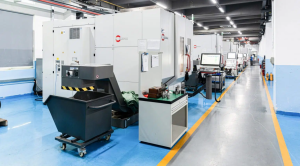
Buyers should also clarify whether the project is a prototype, a small batch, or repeat production. Different order types may require different planning and inspection arrangements. Hanstar’s broader 5 axis CNC machining supplier capabilities can be assessed through this project-specific review rather than relying on general claims alone.
Conclusion
Choosing a supplier for tight-tolerance components requires a balanced evaluation of equipment, engineering experience, process planning, and quality control. Buyers should not select a manufacturer solely because it advertises five-axis machining or lists an impressive tolerance figure. Instead, they should confirm that the supplier can understand the drawing, explain its manufacturing approach, and provide suitable inspection evidence.
A clear technical discussion before production can reduce misunderstandings, identify potential risks, and establish realistic acceptance criteria. Buyers can also review the manufacturer’s wider capabilities and experience with 5 axis CNC machining parts when deciding whether it is suitable for future projects.