
Metal parts rarely fit neatly into one manufacturing category. Geometry, thickness, functional loads, order quantity and assembly requirements can shift the practical balance between subtractive machining and fabricated sheet components. The important question is not which process sounds more capable, but which route fits the part with fewer unnecessary operations. For engineering and procurement teams, custom metal fabrication services become easier to evaluate once the decision is tied to measurable design requirements. At Hanstar Technologies, we look at the part itself first, considering how its shape, material and intended use influence the manufacturing route.
Read The Geometry Before Selecting The Process
CNC machining starts with solid stock and removes material until the required geometry remains. That approach works well for components containing pockets, bores, contoured surfaces, precise datum features or three-dimensional profiles. Parts with substantial internal detail may naturally fit this process because the geometry can be generated directly from programmed toolpaths.
Sheet metal fabrication follows a different logic. Flat material is cut and then formed into the required shape through bending or related operations. Enclosures, brackets, panels and folded structural components often benefit from this approach because the finished geometry can be created without machining away large amounts of material.
Part geometry can also suggest a hybrid route. A fabricated shell may require machined mounting interfaces, while a machined component could incorporate separately fabricated elements. Rather than forcing every feature through one process, engineers evaluating custom sheet metal fabrication services can separate the primary structure from the areas that demand secondary precision.
Match Material Thickness To The Manufacturing Route
Thickness has a significant effect on process suitability. Thin metal sheets are naturally compatible with cutting and forming operations, while thicker stock can provide the material volume needed for machined components. The useful range depends on the alloy, dimensions, required bends and equipment involved, so thickness should be assessed alongside geometry rather than treated as an isolated specification.
Material behavior matters during fabrication as well. Bending can introduce dimensional changes, while grain direction, bend radius and springback may affect the finished shape. Machining introduces different considerations, including tool access, material removal and heat generation during processing.
The material specification should also reflect the working environment. Aluminum may be attractive where low weight matters, stainless steel can suit corrosion-sensitive applications, and other alloys may be selected around strength, conductivity or temperature requirements. Custom metal fabrication services should be evaluated according to how the material behaves throughout the actual manufacturing sequence.
Consider Function, Quantity And Assembly
Function provides another useful dividing line. A component requiring precise bores, complex pockets or close-tolerance interfaces may benefit from CNC machining. Conversely, a large enclosure or mounting panel may gain efficiency from cutting and bending because its basic form comes from sheet rather than solid stock.
Quantity changes the calculation as well. Prototypes and small batches can prioritize flexibility and quick design revisions, while recurring production may place greater emphasis on cycle time, material utilization, tooling requirements and repeatability. Neither process automatically fits every volume level; the economics depend on the specific part and production schedule.
Assembly requirements can settle questions that geometry alone cannot answer. Fastener holes, tabs, slots, flanges and mating surfaces need to align with neighboring components. With custom sheet metal fabrication services, engineers can assess whether these interfaces are best produced directly through cutting and forming or refined through secondary machining.
Evaluate Cutting And Finishing Requirements
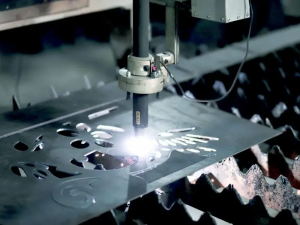
Cutting quality affects the starting point for subsequent operations. Laser cutting can produce clean profiles for sheet components while supporting both prototype quantities and production runs. The resulting edge condition, dimensional tolerance and feature size should be considered according to whether the cut edge becomes a visible surface, assembly interface or preparation point for another operation.
Finishing requirements can also influence the process decision. Powder coating, anodizing, plating, brushing and other treatments may be applied depending on appearance, corrosion resistance, wear or functional needs. Engineers should account for coating thickness and surface preparation where finished dimensions are critical.
Machined and fabricated parts can both require secondary finishing, but the sequence may differ. A design that appears straightforward at the raw-part stage can become more involved after deburring, surface treatment, machining or assembly preparation is added. Custom metal fabrication services should be assessed across that entire sequence instead of only comparing the initial cutting or machining step.
Build The Decision Around Part Requirements
A practical process review can begin with several questions: Is the part primarily a folded structure or a three-dimensional solid? Which dimensions affect assembly? How thick is the material? How many units are expected? Which surfaces require machining? What finish will the final component receive? Answers to these questions usually narrow the viable manufacturing routes considerably.
Cost should be examined from the same perspective. CNC machining may involve greater material removal for certain shapes, while sheet fabrication may introduce forming operations or tooling considerations. Labor, material utilization, secondary processing, inspection and production quantity all contribute to the actual manufacturing profile.
Conclusion
Process selection becomes clearer once the part is viewed as a functional assembly rather than simply a shape on a CAD screen. Geometry determines how material can be formed or removed; thickness influences process compatibility; quantity changes the production economics; and assembly and finishing requirements add further constraints. For engineers comparing manufacturing routes, custom sheet metal fabrication services may suit one component while CNC machining makes more sense for another, even within the same project.
At Hanstar Technologies, we combine sheet metal fabrication with broader precision manufacturing capabilities, allowing our team to discuss the process around the actual component requirements. Send us your drawings, material specifications and projected quantities to start a technical process review.